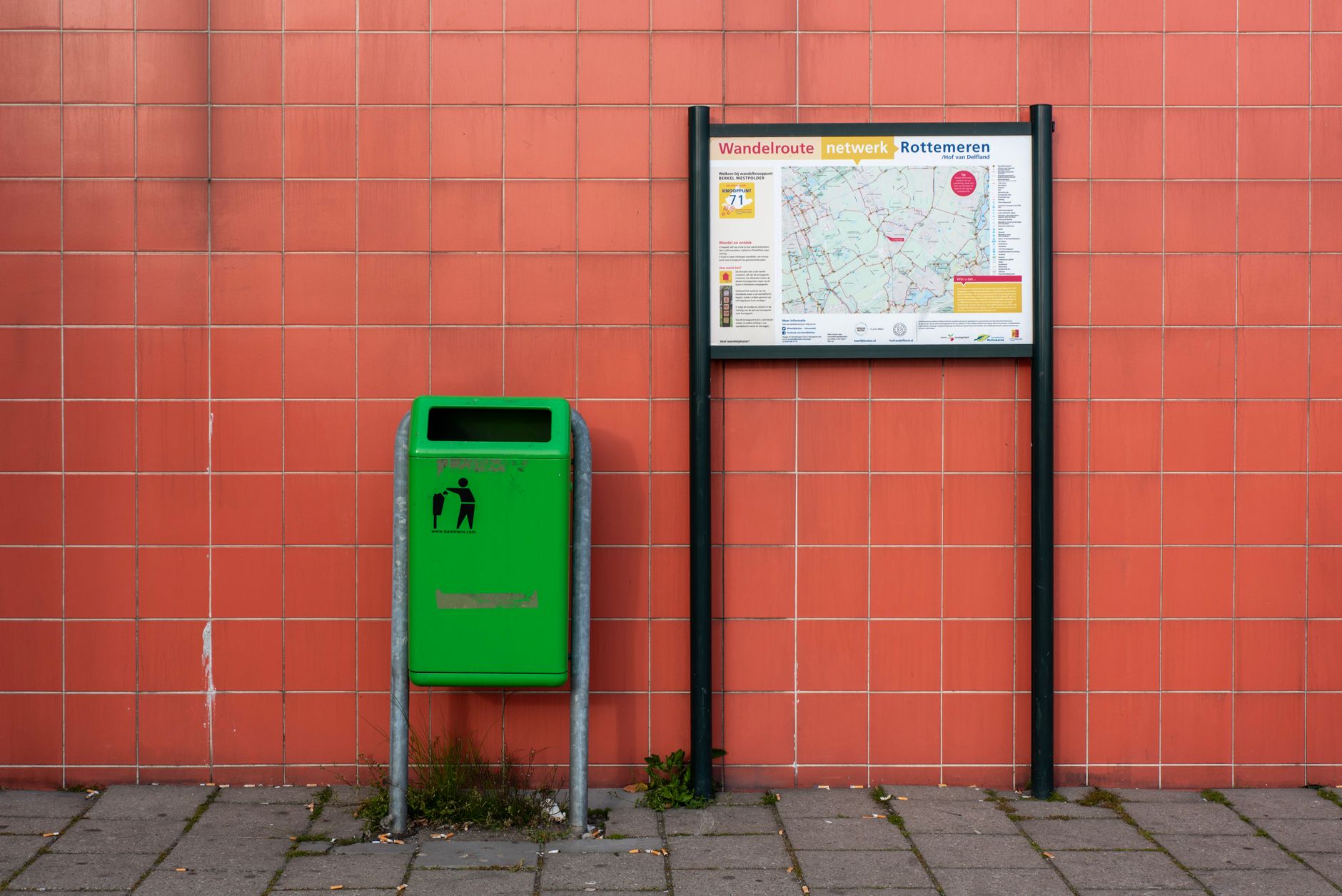
Il y a un café dans la rue. Il y a trois personnes dans la salle. Il n'y a pas de pain à la maison. Il y a un problème avec le pain. Il y a aussi un chat dans la maison. Il y a une belle vue depuis la fenêtre. Il y a beaucoup de choses à faire aujourd'hui. Il y a un livre sur la table. Il y a des fleurs dans le jardin.
Free to browse — sign up to save progress & learn live with a tutor.Get started Are you a tutor? Earn by teaching →
Materials
Student view Learn with a tutor

GrammarA1il y a
il y a — there is / there are
Il y a
A1fr20 min
What you'll learn
- Say what exists
- Negate and question il y a
- Distinguish il y a from c'est
Tips for this lesson
- il y a never changes — same form for singular and plural.
- Negative: il n'y a pas de — the de rule from negation applies here too.
- il y a states existence; c'est identifies/points something out — don't mix them up.
Step 1 of 6
1Reading
In context
Read. Notice il y a stays exactly the same whether talking about one thing or many.
Compréhension
1.What is there on the street?
2.How many people are in the room?
3.What is not at home?
4.Is there a problem?
5.What else is there in the house?
6.What is mentioned about things to do?
7.What is on the table?
8.What is in the garden?
Step 2 of 6
2The pattern
The pattern — il y a never changes
il y a means 'there is' AND 'there are' — the exact same three words, singular or plural.
il y a means "there is" or "there are" — and unlike English, the phrase never changes for singular or plural: "il y a un chat" (there is a cat) and "il y a trois chats" (there are three cats) use the exact same words. To negate it, use the same ne...pas sandwich you already know, and the same de rule: "il n'y a pas de pain" (there isn't any bread). To ask a question: "Est-ce qu'il y a...?" One important contrast: use il y a to say something exists, but use c'est/ce sont to identify or point at something specific: "il y a un homme là-bas" (there's a man over there — existence) vs "c'est mon père" (that's my father — identifying who).
| Form | Example | Meaning |
|---|---|---|
| Affirmative | Il y a un café. | There is a café. |
| Affirmative (plural) | Il y a trois cafés. | There are three cafés. |
| Negative | Il n'y a pas de café. | There isn't a café. |
| Question | Est-ce qu'il y a un café ? | Is there a café? |
Il y a beaucoup de monde.
There are a lot of people.
Same il y a, even with a large quantity.
Il n'y a pas de problème.
There's no problem.
Negative + de, exactly like A1-07's negation rule.
Il y a un homme à la porte.
There's a man at the door.
Existence — someone is there, unspecified who.
C'est mon père.
That's my father.
Identification — naming who it is. Compare to il y a above.
Erreurs fréquentes
- Ils y a trois personnes.Il y a trois personnes.
il y a is invariable — never pluralise it to 'ils y ont' or similar, even with a plural noun.
- Il y a pas un pain.Il n'y a pas de pain.
Don't forget the ne/n' and the un→de shift — the full negation rules from A1-07 apply here.
- Il y a mon ami. (to introduce someone)C'est mon ami.
To identify or introduce a specific person, use c'est — il y a is for existence, not identification.
Exceptions & à retenir
il y a + time = 'ago', a different meaning
Il y a trois ans, j'habitais à Paris (Three years ago, I lived in Paris) — same words, but here il y a means 'ago', not 'there is'. Context tells you which meaning is intended.
qu'est-ce qu'il y a ? is a fixed idiom
"Qu'est-ce qu'il y a ?" literally asks "what is there?" but is used idiomatically to mean "What's wrong?" or "What's up?" — learn it as a chunk.
Astuces & mémo
- Remember: il y a is always exactly three words, in that order, no matter what follows.
- Ask yourself: am I stating that something EXISTS (il y a), or am I POINTING AT/NAMING something specific (c'est)?
- il y a also means 'ago' with time (il y a trois ans = three years ago) — you'll meet this fully later; just notice the phrase pops up again.
Step 3 of 6
3Q&A drill
il y a or c'est?
Match each situation to the correct phrase.
Tap an answer below, then tap the question it belongs to — or tap a question first to pick its slot. Tap a filled slot to send the answer back.
- Q1pointing at a photo, naming who it is
- Q2saying a café exists on this street
- Q3introducing your friend
- Q4saying there are three chairs in the room
Step 4 of 6
4Fill the blanks
Guided practice — affirm and negate
Complete each sentence with il y a or il n'y a pas de.
Example
(1) un café ici.
→ Il y a un café ici.
Exercice
(1) trois chaises dans la salle.
Exercice
(2) pain à la maison.
Exercice
(3) un problème ?
Answer pool — drag onto a blank (or tap to fill the next one)
Next empty blank: 1
Step 5 of 6
5Word order
Build the sentence
Put the words in the correct order.
Example
yailuncafé→Il y a un café.
- Sentence 1Tap the words below to build the sentence.
- Sentence 2Tap the words below to build the sentence.
- Sentence 3Tap the words below to build the sentence.
- Sentence 4Tap the words below to build the sentence.
Step 6 of 6
6Speak freely
Produce it
Describe your room or street: four things there are, and one thing there isn't.
Ex.Dans ma chambre, il y a un lit, une table et des livres. Il n'y a pas de télévision.
- 1.Qu'est-ce qu'il y a dans votre chambre ou votre rue ?
- 2.Qu'est-ce qu'il n'y a pas ?
- 3.Est-ce qu'il y a un café près de chez vous ?